
Infectious bursal disease, IBD, is what many of you know as Gumboro. Let's start with a young flock that looks fine: no mortality spike, no sick birds, nothing unusual on the daily sheet in the first three weeks.
But open a few birds and the bursas look small, the vaccine responses never quite come up, and the flock keeps catching things it should handle. That quiet flock may be the one paying the most.8
This article is about that hidden cost in breeder pullets and broilers alike: what early infection does, where it comes from, and what the breeder flock, the hatchery and the cleanout can do about it.
The player loads from YouTube (privacy-enhanced mode) only when you press play. Watch it on YouTube.
Two forms, one virus
IBD comes in two forms, in breeder pullets and broilers alike. The clinical one hits older chicks, typically between three and six weeks of age, with sick birds and a sharp mortality curve.21
Chicks infected before three weeks of age usually show no signs at all.23 But the virus still depletes the bursa, and the result is immunosuppression.2
The younger the chick at infection, the deeper that immunosuppression goes.2 Infection in the first two weeks of life hits the antibody response hardest.3
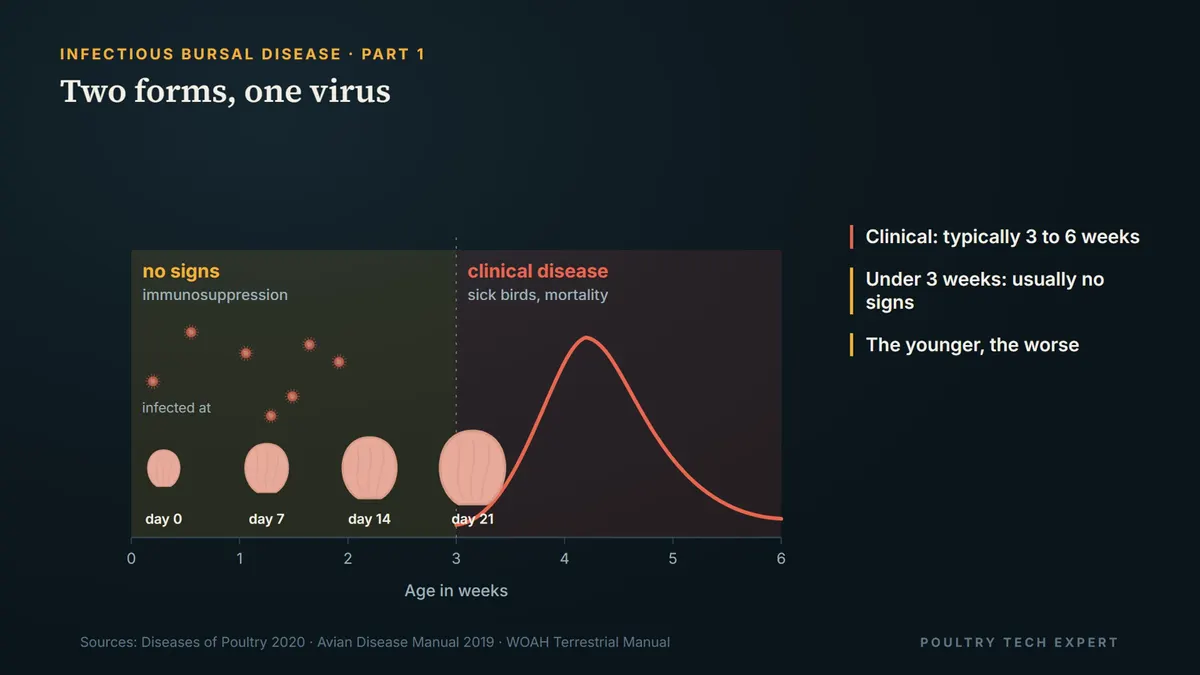
With IBD, the quiet flock can be the one paying the most.
What early infection costs
So what does an early infection actually cost? In the classic studies, the earlier the infection, the weaker the response to Newcastle vaccination, and day-old infection was the worst.1 Responses to other vaccines drop too, and they can stay down for at least seven weeks.17
Infection in the first days of life can also strip the Harderian gland, behind the eye, which drives local immunity in the upper airways. That damage can last up to seven weeks.1
And early-infected chicks are open to a long list of other problems: coccidiosis, E. coli, gangrenous dermatitis, and respiratory viruses like bronchitis and laryngotracheitis.1 In broilers, subclinical IBD can mean slower growth and carcasses rejected at the plant.4
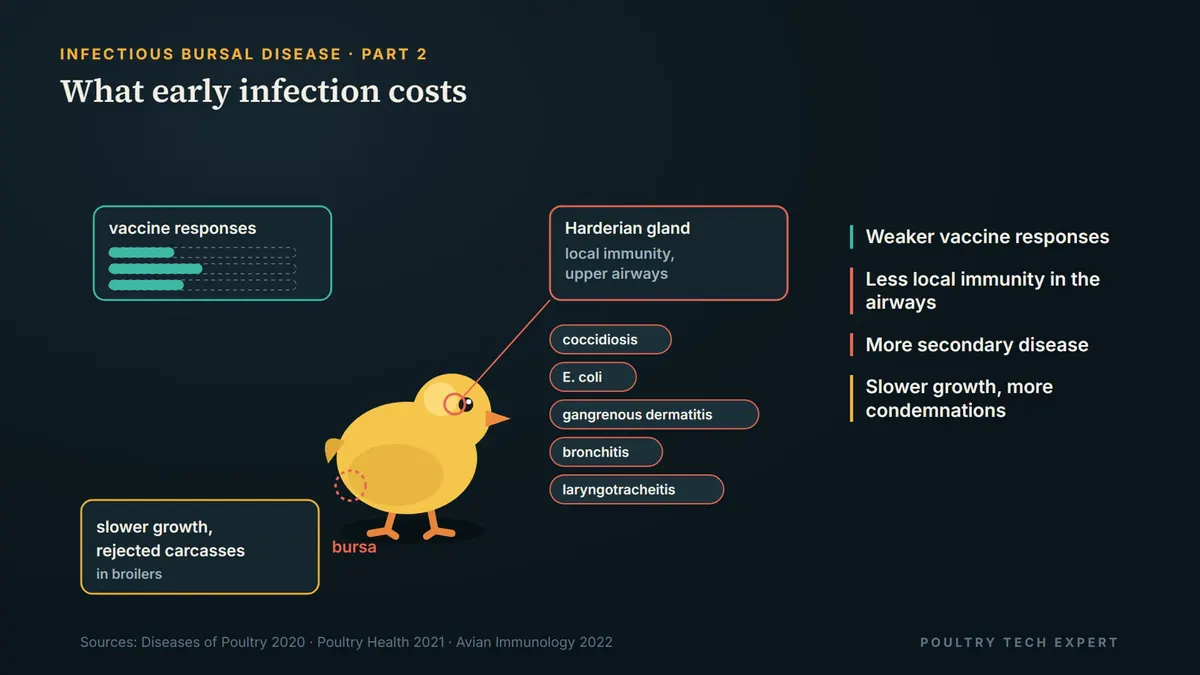
The damage is done in the first two weeks. The bill keeps coming for weeks after that.
The house keeps the virus
Now, where does that early infection come from? Not from the egg.1 It comes from the house. In one classic study, houses were still infective almost two months, and in one case four months, after the infected birds left.1
Darkling beetles can carry the virus from one flock to the next.1 The virus resists many common disinfectants, and it travels on people, materials and machinery.4 Once a site has had IBD, it tends to come back, usually as subclinical infection.2
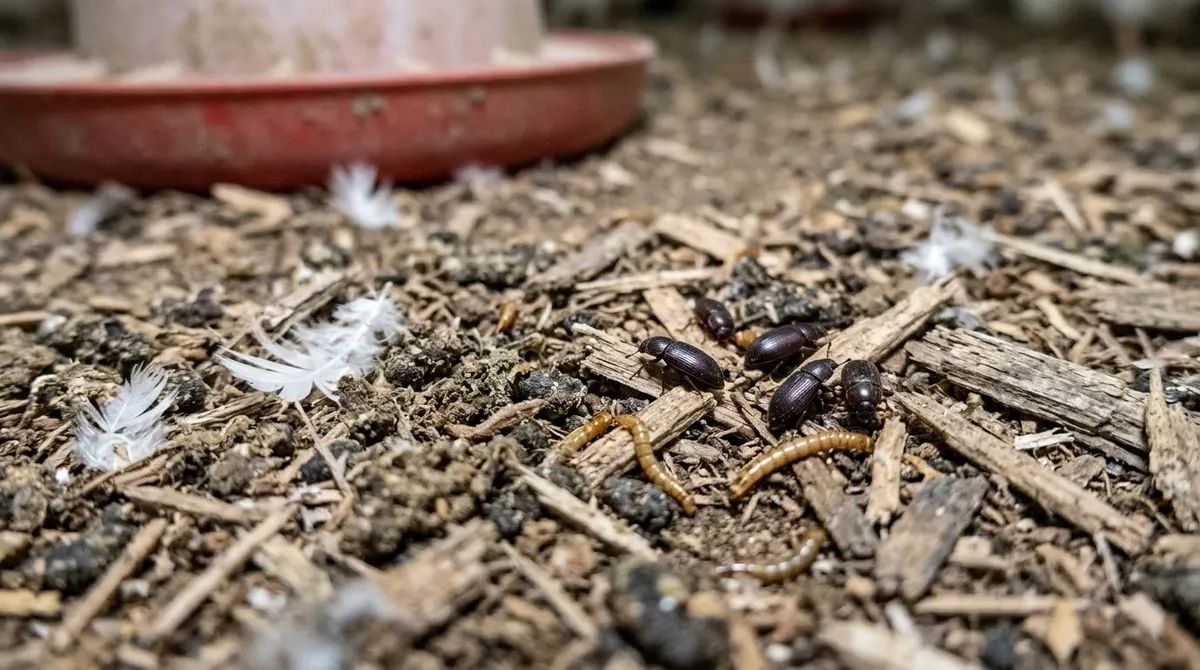
So clean out thoroughly, control the beetles, and use a disinfectant with proven activity against this virus, at its full contact time.41
Formaldehyde does inactivate the IBD virus, while quaternary ammonium products on their own are weak against it.912 So where formaldehyde fumigation is allowed, it's well worth doing: straight after disinfection, with damp surfaces, a warm house and high humidity, then sealed for a day.13 It's a known carcinogen, so follow your local rules and keep people out.13
Even then, a cleanout alone has had only limited success, which is why the breeder and the hatchery matter so much.8 Downtime alone won't do it. A thorough cleanout cuts the carry-over, but it rarely clears IBD on its own.
The breeder flock
In breeders, IBD matters twice. First for the pullet itself. Rearing is one long vaccination program, and immunosuppression of any kind stops a flock from answering its vaccines properly.171 A pullet flock hit by IBD early can go into lay less protected than its program says.
Second, for the chicks. Maternal antibodies protect them against those early immunosuppressive infections.1 From breeders given only live vaccines, that protection normally lasts one to three weeks.1 Breeders that get an oil-adjuvanted inactivated vaccine before lay can pass on protection for up to four or five weeks.1
Live vaccines alone don't build much maternal antibody in the progeny.5 The oil vaccine works best in birds that were primed with a live vaccine in rearing.1
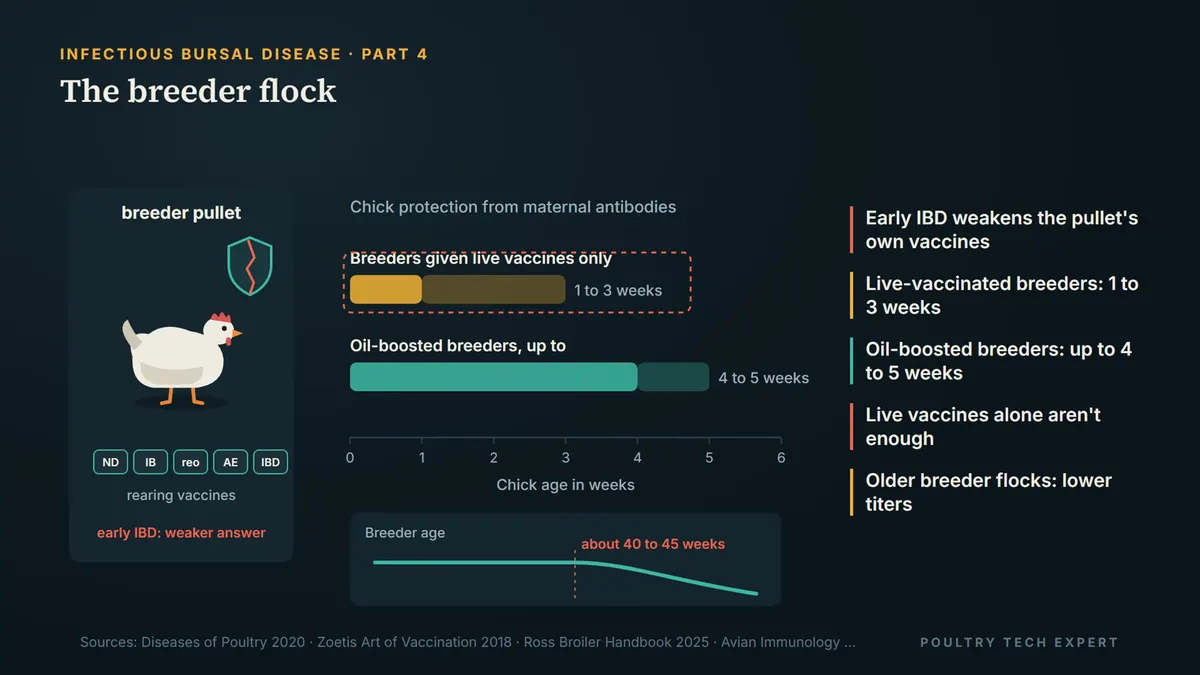
And watch the older flocks. Hen titers can drop after about 40 to 45 weeks of age, and maternal antibody in the broilers declines as the breeder flock ages.510 Tell your hatchery and your vet which chicks come from older flocks. Breeder titers can be monitored, and whether a booster in lay makes sense is a call for your vet.15
A well-protected pullet makes a well-protected chick.
The timing problem
That's also where the timing problem starts. Maternal antibodies can neutralize a live IBD vaccine, so you have to wait until they've fallen far enough.4 In broiler chicks, they halve about every three to four days.5 And as they fall, the chicks open up to field virus.4
Because maternal immunity is never perfectly uniform, there's a period when immune and susceptible chicks live side by side.4 Mixing chicks from different breeder flocks in one house makes that worse, so keep sources together where you can.115
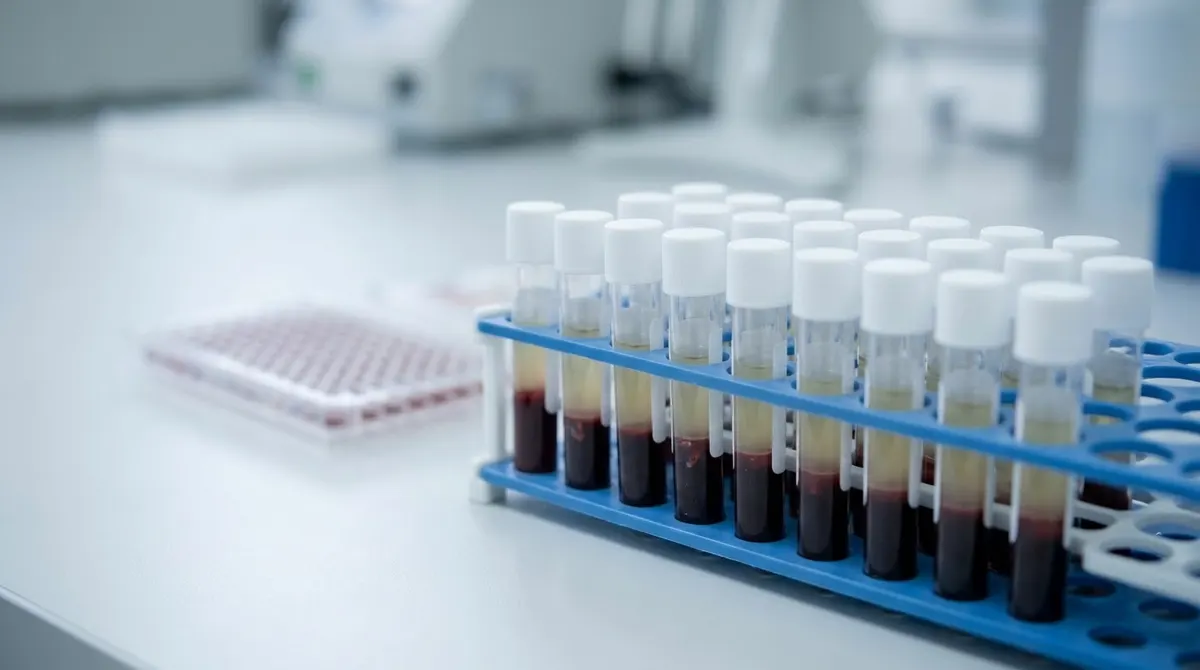
To find the right day, take blood from at least 20 day-old chicks per breeder flock.6 The lab runs the titers through the Deventer formula, or the older Kouwenhoven formula.46 Different tests can point to different dates, so stick with one well-validated method.1
Hotter vaccines, the intermediate plus strains, break through higher antibody levels, so they can go in earlier.4 But they can damage the bursa and suppress immunity themselves.74
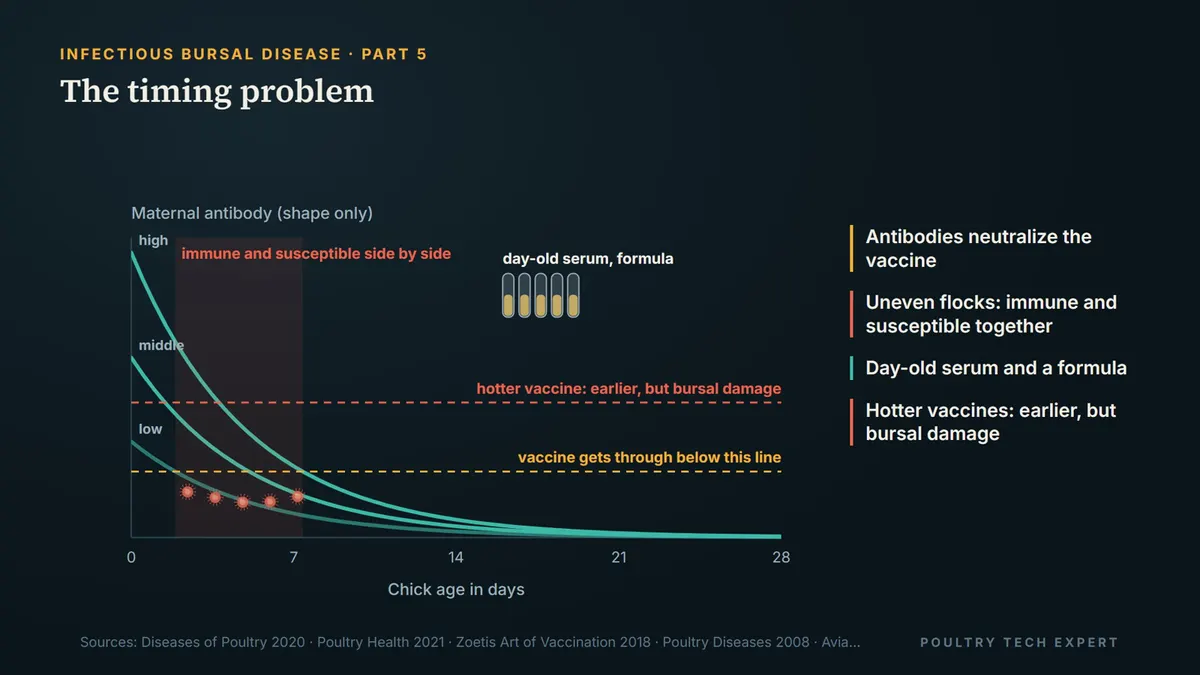
Vaccinate too early, and the antibodies neutralize the vaccine. Too late, and the field virus gets there first.
Vaccinating in the hatchery
The hatchery offers a way around that timing problem.3
- Vector vaccine. The Marek's HVT virus carrying a gene from the IBD virus.4 It builds active immunity even against high maternal antibodies, and the bursa keeps its normal structure.14
- Immune complex vaccine. Live vaccine virus bound to antibodies.4 The vaccine virus is thought to be released at around one to two weeks of age.3
Both can go in ovo or at day old.4 And they also cover the chicks with low titers, which would otherwise multiply field virus for the rest of the flock.5
Hatchery vaccines solve the timing problem. They don't solve the hygiene problem.
A moving target
The field virus keeps changing, too. Very virulent strains can kill far more birds than the classic ones.1
Variant strains first appeared in the United States in the 1980s.4 They usually skip the inflammation and go straight to bursal atrophy, so they're easy to miss.19 Where variants circulate, inactivated breeder vaccines made only from classic strains gave little or no protection against them.1
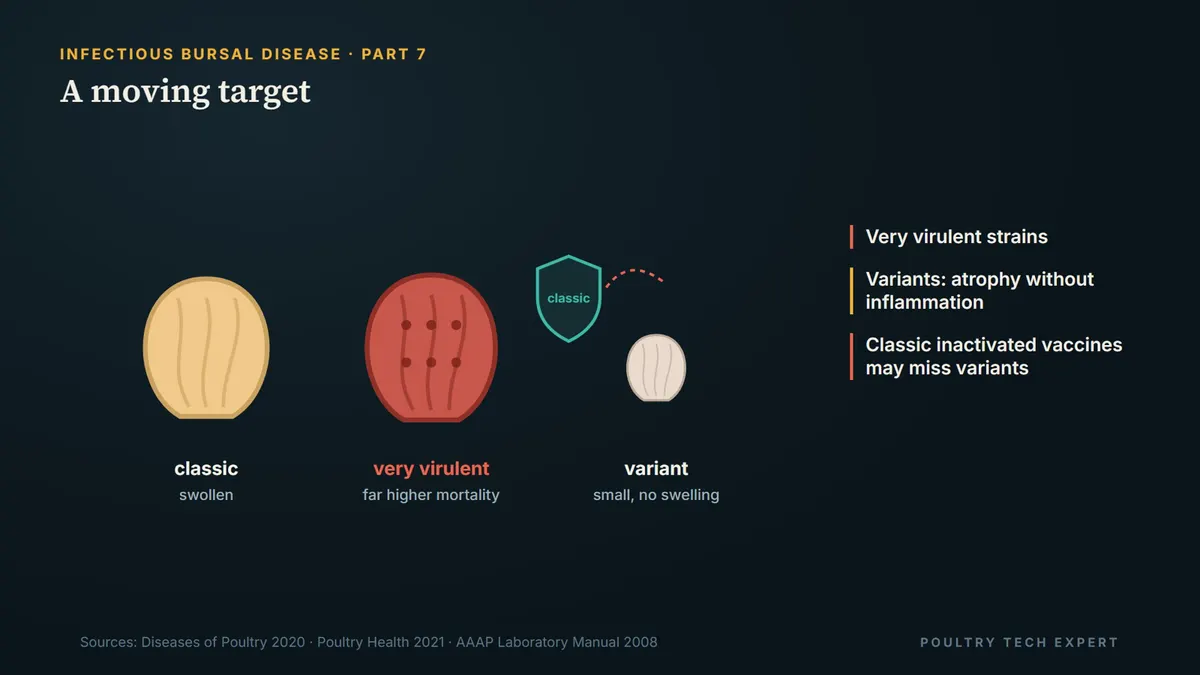
And IBD vaccines protect against disease, not infection, so field strains keep circulating and drifting.4 Know which strains circulate in your area, and check with your vet that the program covers them.
Confirmation belongs to the lab
Before anything else, a small bursa is a sign, not a diagnosis.118 Water deprivation, Marek's and some adenoviruses can also give small bursas.1
Live IBD vaccines can leave bursal lesions too, so the lab needs your vaccination history.4 Bursal histopathology is the key to the subclinical form.3 RT-PCR detects the virus and can help type the strain, but it can't yet tell vaccinated birds from infected ones.14
When IBD is confirmed
So what if the lab confirms IBD in your flock? There's no cure. No treatment has been found that changes the course of the infection itself.12 What you can manage is everything that comes through the door it opens.
Keep water and feed within easy reach. Easy access to water can help the birds through it.14 Take the stress off: good ventilation, dry litter, the right density and temperature. Crowding, dust, ammonia and chilling are what let E. coli move in.15
Then watch for what follows. In the field, subclinical IBD often shows up first as a worse feed conversion, wet litter patches, an uneven flock, and then coccidiosis and E. coli.16 Send birds to the lab early, because whether and how to treat those secondary infections is your vet's decision.14
Expect the vaccines that follow to take less well, for weeks, and ask your vet whether to check how they took.117 And plan the next flock now: a thorough cleanout, fumigation where it's allowed, and the strain typed, so the program fits what's actually on your farm.1413
In short
The real cost of IBD is the infection you don't see in the first weeks, in breeder pullets and broilers alike. You control it in the breeder house, the hatchery and the cleanout, long before the flock looks sick.
Know something better, or do it differently on your farms? Tell me in the comments under the video on YouTube.